Tuesday, November 17, 2020

Xefina Revisited (Again)

Some of you may (or may not!) know that in 2008 I published a photobook via Blurb called "Xefina Island".  That book was made using photos shot over a two year period, from 2007 and 2008.  I had been visiting this small sandbank of an island for much longer than that,  and have managed a few trips back since my book, although the last was in early 2017...  What could more that 3 years do to an island already ravaged by the forces of nature?  A lot, as I learned this past weekend!  

However the island continues to live in an eerie calm, just perched at almost walking distance from the Costa do Sol beaches of Maputo.  Although it maintains it's mystery for most Maputans, except for a few intrepid kiteboarders, it is a habitual haunt for a significant number of fishermen that use it's beach as a launching point for their expeditions.  A small village is home to some of the poorest people in Mozambique, though rich in pride and humility.  I was fortunate to have had had a nice interaction with some of them while taking these photographs.

I have to confess that the impetus for this trip were a photographer friend, Nii Obadia, as well as my wife.  Through the former's insistance and latter's organisation, we were able to make it onto the island.  Here are some pictures from yesterday's trip.  Hope you enjoy.


Fisherman on structure


Wait, am I in your photo?

 
New beach structures


Claw


Monolith


Fishermen and structures


Differing horizon lines


My favourite structure

 
Local fishermen with their catch of oysters

The long walk back to our boat


For the technically minded these photographs were taken with a Canon 1Ds mark III, which was released about the time I started photographing this island (2007!).  Coupled with this camera were two Nikon (!) lenses, a 17-35 f2.8 and an 85mm f2.8 Tilt and Shift lens.  Other photographs (not shown yet) were taken with a Hasselblad 500CM with a 50mm f4 Zeiss lens on Kodak Plus X 125 asa film.  Oh, and for the record, I used the Gitzo tripod I saved from oblivion as reported in this blog page.

Saturday, April 4, 2020

Fixing a Gitzo GT1541OT

 Photo by Cavell from Facebook - used with permission

So today's post is about one of my pet likes.. fixing things.  I was browsing Facebook's marketplace when I chanced upon an advert for a Gitzo tripod for $80!  Intrigued, I read on, although the pictures explained exactly why the tripod was going for so little.  A tripod that in it's day (+/- 2009) retailed for 800 POUNDS!  The guy who I eventually bought it from said he paid over AUD 1000.. still a big chunk of change.  As I am living away from my trusty Giotto tripod (Chinese clone of Gitzos), and still waiting for my Peak Design travel tripod, I was in need of some stability.. so to speak.  So I met up with the seller and after a bit of haggling bought the tripod and head for a measely AUD60..  However the scars were deep and they were many.  The centre column has completely crushed in the middle and was disintegrating at every attempt to raise or lower it into a position, where it could be tightened and put to good use.  The leg joints were completely loose and 2 legs had lost their original bolts and were held together by your bog standard galvanised bolts, all rusty and not really doing the job.  Still, could be worse...


 Photos by Cavell from Facebook - used with permission

And indeed, when I got home, on looking closely at one of the legs, it too had been wacked, although thankfully the scar seemed mostly superficial.

Note to self, bring my reading glasses when examining photo equipment!  

The most pressing problem was the centre column, which in it's present state was totally unusable, as the legs did in fact work, though in a wobbly fashion.   So I immediately set about dismantling the legs..  Priorities!  What I found both disheartened and delighted me.  At some point this tripod had sat in the back of a car driving across Australia.. Only that could explain how everything had gotten loose and in some cases lost.  Washers were missing, bolts replaced..  Anything that was a screw had some issue with it!  Someone though had tried putting the legs back together at some point, and where there was once brass, we now had either a galvanised washer or none.  Eventually I managed to get everything off, cleaned and then re-assembled the legs using the original parts to complete 2 of them, with all the "spare parts" used to complete the third leg - two perfectly working with all the right parts.. and one.. sadly a frankenstein.  A quick visit to the "net" revealed that Gitzo, 10 years after releasing this tripod, still stocked spares!!  I was totally amazed.  Not only that, they had an exploded diagram of my tripod with all the spares marked.. You could practically build a new tripod out of parts!!!
Gitzo parts manual for GT1541OT

However Gitzo is not cheap, and the centre column and leg bolt set would set me back US165.. Not a huge amount in the grand scheme of things, but I thought I could do better.  Also, I wanted to use this tripod NOW, not wait for the vagueries of Christmas time shipping!  So I started searching for suppliers of bolts and washers in Brisbane, Australia (I'm here now) and found a few, one just 10 minutes away.  So at 2pm on a Friday afternoon I shot off down the road to try my luck..

Items required:

2 stainless steel button hex bolts M8 15mm long
2 brass washers 6.7x15x1.5mm
2 stainless washers

After 10 minutes the pregnant storekeeper handed me a little bag with part that approximated my need, but weren't exactly the right size.  Note to self.. next time bring along a caliper.   Total spend AUD 1.18.   Well at least I wasn't too too out of pocket!

So as that hadn't gone quite as I hoped, with the hex bolt heads being a bit too small for the tripod, I headed to Bunnings Warehouse, where low prices are just the beginning..

While there I found larger philips head bolts.. not the most elegant solution nor as easy to tighten, however a much better fit for the tripod leg connection.. more brass washers just in case the first lot weren't perfect and then.. well, what about the tripod column?! Yes, I'd need to deal with that, so some glue, sandpaper and gaffer tape..  You'll find out just after the break..

Before we continue with the rebuild though, I thought I'd talk a little about this tripod, which doesn't have much in the way of literature about it.  A long and almost fruitless Google search did however provide a few pointers.. I finally found one video with barely 15 likes that talks about how this tripod is built, which at only 4:44 is definitely worth a watch.  If you don't have time, let me summarise.. Stainless steel parts so tripod can be used in the sea with salt water.. aptly called Ocean Traveller (the OT part of the GT1541OT model number).  So this is a Gitzo traveller tripod, one of the first with reverse storage legs to make it smaller when packed, but almost as large as normal tripods when opened up and extended.  I'm not a fan of tripods with big centre columns as they tend to sway in anything but a whisper of wind.  Not this tripod apparently.  The load rating is low at 4kg, but I believe that to be conservative.. Maybe not for large format, but medium format should definitely balance on top.

So back to the rebuild of this Ocean traveller.. The centre column.. Well, in it's present state it was all but useless..however I'd read somewhere about shortening broken carbon fibre tubes, and so set about doing just that.  After a tap test (tapping the tube to hear changes in sound) I worked out that roughly half of the tube was damaged.  I then proceded to wrap the gaffer tape around the tube along where I wanted to cut, and just next to that with scotchtape, leaving just a thin sliver where I would cut along.  This would help prevent spintering as I cut through the fibres.  I did a test cut into the broken tube first to understand how my handsaw would react with the carbon, and proceded to make a huge amount of dust as I cut into the tube.  So if you're doing this at home, then make sure you wear a dust mask, have a cloth or piece of paper underneath.  The cut was almost perfect, with very little splintering.  The tapes were doing their job.  I then cut into the channel I'd left uncovered between the 2 tapes and with bated breath proceded to make another almost perfect cut.  Now I had little less than half a perfect carbon tube.. However the open end would be at risk and would need to be stoppered, so I took the off-cut end and removed the metal stopper, and then glued that with epoxy glue into the open end of the good part of the tube..  Perfect connection!  And you can hardly see any glue.  Wow, I must be getting good at this after years of model planes :-)

So we are done!  Perfectly working tripod with a shorter centre column, ready and waiting for my camera to go take some pictures.  But wait.. there's more..

Because I'm a bit particular about these things, the AUD1.18 bolts were not doing it for me, and so I decided to splurge on the Gitzo bolts and washers, which in actual fact were a bit wider and held the leg more securely, so off I went to their website, ordered the parts, and 2 weeks later they arrived, right in the middle of the Christmas rush! Well, Christmas came early for me, as the parts were spot on, and now I have a perfectly working, perfectly looking (short) Gitzo tripod.

With Gitzo spare parts, and the other consumables I ended up spending $60, and with the tripod at $60, a total of AUD120, or for those inclined to use greenbacks, around USD80.. Not bad for one of the highest quality tripods I've ever seen in my life.

And one last word about this ST version.  The stainless steel used in this tripod is a special cast type which is non-porous and therefore even more rust resistant than ordinary stainless steel, and therefore weathers the elements perfectly.  This tripod is 10 years old and not a spot of rust on it!  Obviously this process must have been very expensive because Gitzo (now made by Manfrotto in Italy, after it's UK holding company closed the French factory down) no longer manufacture this type of steel.  All their tripods have their standard greyish laquer paint, which is nowhere near as resistant to chips and bangs and marks, and eventually rust.   Sad.  You will not see a more beautiful tripod around than this one..

Tuesday, November 19, 2019

I'm in love with old lenses

There.. I've said it.  I love old lenses!  Why is this important?  Because recognising a problem is the first step in beating it.  Beating it you ask?  Well, when you ask your wife to take out your cameras and lenses so they can get some UV rays to kill off fungus and other nasties.. and she writes back (I was travelling you see).. to say that there were 27 bodies and double that amount in lenses... You sort of realise there's a problem.  Yes, I absolutely love old lenses and cameras, and I'm not just taking of Leica and Hasselblad here, but even Nikon and Canon glass.  And cameras?  Anything mecchanical but not just.  Even digital cameras are old!  We are well into the digital revolution and it's been almost 20 years since the first viable consumer and professional digital cameras have been out.  I can almost remember with giddy excitement when the Nikon D1 and then later the Canon D30 were released in and around 1999..  That is T W E N T Y years ago.. Yes... 20.  So by now even those early digital cameras have now become.. old.. and for me collectible..
So how does one reconcile 1 good shooting eye and 27 bodies and 50 odd lenses?  Well, quite simply I can't.  I just like collecting them, shooting them, playing with them.  More importantly each camera had it's own specific lenses, and each brand made some spectacular optics.. And it's really the optics I enjoy.  Which is why I own so many different brands.   To the uninitiated amongst you, this is all known as GAS.. or Gear Acquisition Syndrome.  As the name states, this is a disorder and I am afflicted with it.  As afflictions go though, it is fairly innocuous, as long as you don't let it ruin your bank account!  As there are some pretty expensive pieces of glass and bodies out there.  Thankfully though the modicum of scotish and neopolitan blood I have coursing through my veins mean that I'm not attracted by the impossibly rare and ludicrously expensive items out there.. at least not enough to spend money on them!   No, all my objects of desire are relatively attainable.. However that I have spent a sizeable chunk of money on them is true.  Please oh please don't let me die and my wife sell my camera and lens collection for what I told her I spent for it!   A similar line exists for cyclists by the way, who are also afflicted with Gas.. and another maxim as well.. the correct number of bikes one should own is N+1, with N being the current number of bikes owned.  Again, the same thing applies to cameras and camera collecting..  So my search continues for the very perfect camera body and lens..
Except there is no such thing.  Perfection is a state always strived for, but never attained.  The Japanese are infuriating because for every new camera they build, they almost always put in some flaw.  Canon does this by taking out a random feature that was in the previous model..  Wabi Sabi anyone?  They are though in the business of selling consumer products, and they need our patronage in a year or two's time when their new batch of products is out.  I however have jumped off that bandwagon, and prefer to buy their older models.  Except for mirrorless.   Yes, that new buzzword mirrorless..
Why?  Well, quite simply because I can then use ONE body with all of my lenses..  And remember, the only reason I have all those bodies is to mount all those wonderful lenses!  And again, as I said before, no single manufacturer gets is right all the time.. Each one designs a spectacular product once in a while, so there are many great lenses out there from different manufacturers.  All you have to do is look.

Now in my search for lenses, I tend more towards portrait focal lengths, and seem to have a preponderance of lenses in the 50 to 135mm length (for 35mm film)..  Obviously there are lenses that go beyond this range, but for some reason I seem to gravitate to that central bit of focal range.  So here goes, a partial list:


- Canon 50mm f0.95 rangefinder lens.. This lens, built 20 years before Leica got around to building their Noctilux, was a technical marvel made to surpass the limitations of the film of the day, which couldn't go past 400asa and was grainy as hell.  It was released in the early 60's and my copy was purchased by my father while working in Japan.  If you wanted to take pictures at night, without using a flash bulb, then this lens made it possible.  Today it is know as the dream lens.  Later in EF (electro-focus) territory Canon again tried to replicate their earlier feat by releasing a f 1.0, still today the fastest autofocus lens on the block, though sadly discontinued.  Nikon has gotten on the bandwagon in mirrorless territory with their Noct 58mm f0.95.. but.. always a but.. MANUAL focus.. Remember what I said about holding something back in their designs?  Truly infuriating!


- Nikon 50mm f1.8S Pancake lens.. released only for Japanese market in 1980, in another one of those infuriating oriental traits.  They did of course release the cheaper E version for the rest of the world..  Surprisingly small, sharp and nice bokeh.  This unassuming lens gets used more often than my Nikon 50mm f1.2 AI-S lens, simply because it is so so small with a very easy focus ring.  Some complain it's hard to focus because the focus ring is so thin, but that's not the case for me.  I leave it at f1.8 and don't have too much difficulty in nailing focus.  I also own the modern af version (AF-S) which is HUGE in comparison, made of plastic, and only good for 10 years according to the sticker on the bottom.   Maybe the new one is sharper, but surprisingly this older design just gets it right.  Sharpness isn't everything, and sometimes size matters. 


- Nikon 35mm f2 pre-ai lens converted to AI. Designated O.. which means Octa, or a lens with 8 elements.  No subsequent AI or AF-D lens has really managed to impress me, although more recent AF-S lenses do better in terms of absolute sharpness.. However this one has oodles of character, distortion, vignetting, and bokeh.  Bokeh?! What's that?!  A discussion for another time..  One other thing these older lenses have is non-circular apertures, which means if you want to get some starbursts on your points of light, these older lenses are what you want.  Sometimes progress ISN'T necessarily better.  Certainly tastes change, and the desire for creamy backgrounds has pushed manufacturers to trying to create the "perfect" circle.. Not to my taste though..


- Canon 50mm f1.2 EF lens.  I owned this lens years ago, and recently bought it again for it's amazing shallow depth of field and more normal field of view.  Great portrait lens, if you can nail focus.  Can't wait to use this on a mirrorless body with eye AF.. Should be scruptuous..  This f1.2 lens is the fastest available autofocus aperture lens currently on the market.  The Noctilux from Leica is manual focus.  So this one is just a bit easier to use.  I simply love it, although it is difficult to use properly. Especially on an antideluvian DSLR that I'm using, the 1ds Mk III, from 2007!  Still when it works, it gives you sharpness where you need it and the rest of the details melt away.


- Canon 135mm f2 EF lens.. A portrait behomoth.. Actually it's not too big, although the lens hood is almost as big as the lens!  Always wanted this lens, though at the time I gave into Canon marketing and bought the 70-200 f2.8 and later the IS version.  Both lenses were sharp but the IS introduced horribly distracting bokeh that made me want to vomit (a bit of motion sickness..).  This 135 lens is known as "creamy" and the transition from focus to out of focus is simply mesmerisingly soft.. and... creamy.  Truly a joy to use and bitingly sharp wide open. Really... it is quite impressive. At this focal length, and with proper distance between subject and background you get e very strong sense of subject separation.


- Nikon 135mm f2 AI lens.  I had this lens before the Canon above, and although it's manual focus, is still quite stellar.  I haven't had the courage to pit them against each other.. I tend to use the Nikon with film photography on an F3 body, and the Canon for digital photography on a 1DsIII, so not directly comparable.. But one day I will..  Manual focus with such a fast aperture is bound to lead to some dissappointment, but in situations where you can focus to infinity, the foreground does a gentle dissappearing act that is quite pleasant, like in the photo above.  On mirrorless of course you'll be able to nail focus, just at a slower pace than with AF.  Still gorgeous, and a nice hefty piece of glass in an indistructible metal casing that recals a time past when products didn't have a 10 year expiry date. And let me reiterate, wide open it is as sharp as a surgeon's scalpel, while the background is as creamy as a Roman capuccino.  Truly delightful (if infuriating) to use.
 

Photo on it's way - Waiting to develop my roll of film!
 
- Hasselblad 150mm f4 CF lens for the V system.  This is a recent purchase, and I'm ashamed to say how little I paid for this lens.  It is really sad (although good for my wallet) how many old lenses can be had for so very little, if you know how to shop.  I guess I have to be thankful for the advent of smartphones!  This lens hasn't seen much use, although meccanically speaking the Hasseblad V cameras are a true marvel of engineering and so should manage to make it into the next century without any issues. Totally manual, yet with all the controls and failsafes that you find on later electronic cameras.  If you can't take a photo, it's because you made an incorrect selection!


- Nikon 85mm f1.4 AF-D  The portrait monster that sucks up light and looks oh so good on my Nikon D3s.  It's a hard lens to use though, as focus is paper thin and more often than not an eyebrow will be in focus, and the eye not! So frustrating, but when it does nail focus, it can render some amazing images.  Got to know what you want to achieve with it, as not every shot needs total fade to background!  Sadly harder to use on Mirrorless because there is no internal AF motor, but with focus peaking it is still doable.. Supposedly surpassed by more modern designs that achieve greater sharpness at the expense of a cheaper and less durable housing.  Anyway.. sharpness is overrated!  This is another lens that will make it into the next century.  Sadly we'll all have personao AI bots taking perfect pictures with their built-in eye-imagers.. 


- Nikon 70-200 f2.8E lens.  Only one of 2 zooms that I revere.  A truly spectacular lens with amazing sharpness.  Satisflying sharpness.  Does not miss a beat, perform badly, totally well behaved.  Only annoyance.. can only use wide open on my film bodies.  Then again.. WHY exactly do I buy fast lenses?! To stop them down while shooting!? Noooooo.. So actually, this lens does NOT have any flaws, even the previously mentioned one. But does it belong in this listing?  Released in November 2016.. it is only 3 years old.  So though not technically old, this is a lens that I will want to own in 20 years time (if it's still working). Thankfully it is built like a tank, weather sealed and a joy to use and notwithstanding it's heft, is manageable in the weight department.  Obviously Nikon will release another in 6 years which will be better than this one.. but this one is so good I may not care!


- Nikon 105mm f2.5 pre-AI lens converted to AI.. I sort of have to add this lens, just because every great photographer out there has made mention of it (Steve McCurry shot the Afghan girl with this lens).  I bought the older version so it could keep company with the 35mm f2 O Nikon, which is of similar vintage.. back in the days of the original F mount without aperture feeler..  Sadly though I find that my copy has a stiff focusing ring which makes it rather laboursome to use, although it does produce quite pleasing images.  It is small, which makes for a compact street shooting combination with the aforementioned 35.. Maybe I should just get out and shoot more with it!  Certainly lighter than the 135mm Nikon.

*  *  *

whewwwwwww..... Need to take a breath.. this is getting into a long post.. But.. What was the whole point I started with?! Oh, the afflction of GAS, and the first step in solving a problem was recognising it.  However as I've gotten this far, I might as well admit that I DON'T recognise a problem here. AT ALL.  I mean, what's wrong with collecting old lenses?  It's not like I'm massively impacting the planet?  If anything I'm sometimes saving lenses from going to the tip.  Maybe those lenses though didn't quite make the grade in my list of "Best of".. In any event I'm not fuelling useless consumerism!  Although the accessibility of these old (and optically quite fine) lenses is in part due to the consumer nature of our modern western societies.  Which is sad.  We humans are on a relentless persuit for newness and perfection, but sometimes we leave it behind.  And that's why I search out for these old lenses, because perfection, or the striving of it, can be found in older things.  Interlude over, back to the lenses..

*  *  *

- Leica 90mm f2.8 Elmarit-M lens.. Released in 1980 and according to Ken Rockwell one of the best Leica lenses.  He later goes on to state that it's the easiest focal length to design.. Bought this on a whim, and though it's small it is NOT light.. Very dense glass in there.  At 2.8 subject separation requires work and correct shooting distance..  The lens is exquisitly designed and built, with integral lens hood, a nice leather pouch, and a very smooth focusing ring.  The M bayonet mount is possibly the best lens mount ever, although Hasselblad comes a very very close second.  Why the M mount?  Because it has a very short throw to click the lens into place.  Hassy gets second place because you have to contend with the shutter mecchanism which needs to be aligned with the lens (i.e. in the same state as in cocked). So good on you Leica for in 1954, before the F mount (1959) had worked out how easy it should be to mount a lens securely!

- Leica 90mm f4 Elmar-C lens released in 1973.  What? 2 Leica lenses the same focal length and one stop apart. Are you crazy?  Well, I do appreciate fast glass, hence the first Leica.  But then I couldn't pass up a (relative) bargain, hence the second lens. At less than a quarter of the price of it's one stop faster brother, it is quite cheap, possibly Leica's cheapest M lens, although officially never meant for an M body, but rather the CL body made for Leica by Minolta.  But of course it's an M mount so you can use it pretty much anywhere you want.  It's chief attribute is it's lightness and it's compactness, and image quality is surprisingly good and surprisingly close to the f2.8.  So why do I own both?  I'll eventually sell one.. I just can't decide which one I'm keeping is all!

- Hasselblad 120mm f4 modified Petzar lens.  Now this is a strange lens, and not the best optically.  In fact it tries to recreate the wierd whirly effect of early Petzval portrait lenses, which were the first large aperture lenses evailable for large format cameas back in 1840.  So a slavic engineer decided to convert old C Hasselblad lenses using modern optics that try to recreate an ancient optical design.  The effect, when it works, is quite mesmerising. When it doesn't it just looks boring and out of focus.  Just have to keep on experimenting though.  Sadly no sample images, as the last roll I shot came out blank.. Maybe I loaded it backwards :-)


- Mamiya RZ67 110mm f2.8 Z lens - A massive hunk of glass, but then a fast lens should have that attribute.  This lens if for a medium format 120 film and covers a 6x7 negative.  The professional's camera of choice back in the day, the RZ67 is now available on Ebay for 1/10th of what it went for.. and the lenses for considerably less.  These lenses work with a camera belows, so they are hard to adapt to other cameras, although there is now a very expensive adapter that includes a focusing heicoid to allow focus.  This 110mm is essentially a 50mm in 35mm terms.. Too many m's!  But you get what I'm saying.. The large negative gives you oodles of detail, although a big heavy bulky camera to work with that prefers tripod shooting, but will accept hand-held shooting for brief periods of time.  I like the fact that you can shoot peel-apart Fujifilm and you effectively get a 7x7 image.  At least you could.. until Fuji stopped making that film in 2016, and with stocks all but dried up, that option is no longer available.. Or is it?! These people have managed to reverse engineer the pack film, and are producing it now.. Quite fantastic, human ingenuity.  And shame on Fuji for stopping production of such a wonderful film!  When shooting normal film the 6x7 negative will enlarge nicely to an 8x10 print (almost) which used to be the standard print format, before A4 came along.  Interstingly the 35mm film format coincides almost perfectly with A4.  Which shouldn't be surprising since A4 is a German standard, and Oskar Barnak spooled the film sideways for his iconic Leica portable camera, the genesis of our modern digital SLRs.


- Hasselblad 80mm f2.8 CF lens - probably my favourite of this brand, or rather my most used Hassy lens.  Like the Mamiya above it is a "normal" focal length and mimics a 50mm for medium format, although comparisons with Hasselblad's 6x6 negative and 35mm film tend to understate the differences.  We're talking about a square format, which until relatively recently Hasselblad touted as the "Perfect" format (until they started making digital backs with 2:3 aspect ratio).  It certainly forces you to look at your image making in a different way (maybe the eye level viewfinder also helps in that regards!).  I find I have to slow down and search for the perfect composition that will fit in a square box.  Which makes the V bodies slower, but also more satisfying to work with.  Although I called this a Hasseblad lens, the name inscribed on the lens itself is Carl Zeiss, a german optics maker.  Hasselblad simply made the box and farmed out the rather more difficult task of making lenses to the Germans.


- Pentax 135mm f2.8 K mount manual lens.  I've probably owned this lens the longest.. and since I started shooting Pentax in 1992, that really is a long time.  I don't use it much today, but at the time it was my favourite portrait lens.  All the advantages of a small lens, long focal reach, wideish aperture mean you can really make your subject stand out.  Not particularly rare, but a gem of a lens that brings back some memories, and supremely competent at what I like doing best, taking portraits.  the above image is a roll of Lomo 200ASA - wierd film - processed badly in Mozambique and converted to B&W.  Still you can see the nice effect in the out of focus areas.


- Nikon 85mm f2.8 Tilt and shift lens - This lens is quite complicated to use, quite finnicky, but can yield some very incredible images.  Scheimpflug anyone?!  Optically a very sharp lens, can be used in half sized macro capacity, and for portraiture can have just the eyes in focus and everything else not.  A very specialised lens, not easy to use without a tripod, and on film can be unpredictable. Well on digital too, but you have a lot more control over the digital image in a computer, and fixing brightness issues is probably the main one.  But otherwise a truly unique lens, although nothing that a large format photogragrapher wouldn't know about..  The subject separation can be even more drammatic than faster lenses (i.e Nikon 85 f1.4) if you know how to manipulate the plane of focus properly.  Other times you just get wierd pictures with noses and ears in focus and nothing else.  Hard to use, but when you get it right, quite satisfying.


- Nikon 17-35mm f2.8 AF-S lens - A workhorse lens for me.  The large aperture means that even though it is wide angle you can achieve nice subject separation with a bit of work and planning.  It's optical design has probably been surpassed by newer lenses, and at 35mm the older O Nikkor lens for me does a better, or at least more interesting job.  However I did say I'd mention 2 zooms in this list, and this is the second one.  For autofocus work with digital it ticks the boxes, and it's an old lens to boot.  The front element has a wierd aspherical nature which is truly bizzare to the touch, with a dimple in the middle.  It is satisfyingly made of metal and wouldn't feel out of place in a war zone, and crucially takes 77mm filters, which means it works very well with my other zoom, the 70-200 f2.8.  It too will be around well into the next century. Probably only as manual focus, as the motor will have given up the ghost by then, but everything else will work perfectly.  Superceeded by newer designs, that won't last as long.  Such is consumerism today.


- Nikon 24mm f2 AI-S lens - Almost forgot about this manual focus wonder...  An old design, with heaps of distortion, although no moustache distortion like the 20mm Nikon that I couldn't stand.. Bokeh is average, but the wide aperture does allow for some fairly good subject separation..  It's really small, the focus throw is very short meaning focusing is fast.  I really struggle between this lens and the 35mm O when I want wide angle.. In the end this does more landscapes and the 35 ends up working more with people.  

*  *  *

So when and how do I use all these lenses?  Well as you've seen there's a mish-mash of older and newer lenses, manual focus and AF.. Basically whatever I'm trying to achieve photographically will have me reaching into different parts of my photography cabinet, grabbing different bodies and lens combinations.  For street work in film I tend to have 2 kits - the F3 with the manual focus trio 35mm, 50mm and 135mm (or sometimes the35 + 105mm).  If I want some autofocus then the F6 will come out with the 17-35 and 70-200.   If I'm walking a lot though the F3 will get the nod as the manual lenses are lighter and a lot smaller.
If I'm shooting a wedding or an event then I'll bring along both the Nikon and Canon bodies (D3s and 1DsIII) and the primes (50 and 135) will go on the Canon and the 17-35 and 70-200 on the Nikon.  That's quite a weighty combo, but with fast action covered by the Nikon, the more formal portraits will be done by the Canon. Although the stellar 70-200 will do some of those as well, especially as we reach the end of the day and the VR and higher ISO advantages of the D3s come into play.  Events are fast action and so I'll probably just take the Nikon setup.  Portrait sessions are a completely different story, because I'll throw just about every portrait lens I have at the subject, and see what looks best later..  When I need more compression the trusty 70-200 will be front and centre, although the two 135mm's, from Nikon and Canon also help in this regard.  If I'm outdoors and can swing a nice leafy background then the Petvar Hasselbad will come out to play, and even the old Canon 50 0.95, as it too has a distinctive bokeh that works with distant foliage in the background.   For clinically sharp headshots the 105 f2.5 manual focus Nikon still can't be beat.  For more dreamy images wide open, the 85 f1.4 Nikon is the one I'll use, and if I need a bit wider the Canon 50 f1.2 will come out, especially if I need to nail focus and need to work faster than manual focus allows me.  For situations that aren't repeatable (i.e. weddings!) you need to trust your equipment to get it right, and you need your equipment to be fast.  It's unusual that I use two different camera brands, but they each have particular lenses that work for me.  I could mount my Nikon lenses on the Canon (not the other way around), but the ergonomics of the Nikon bodies is just that little bit easier on the hand, whereas the Canon L lenses are superb, especially their primes.

Lens collecting is fun for me.  The chase. Finally finding something.  The negotiation.. When I, with bated breath, finally open the package... There's a certain thrill in the hunt.  There's definitely a tactile connection between me and something that I feel has been made well, that has a certain heft, a certain volume, a certain feel.  However I'm not just an idle collector, and these lenses all have work to do, and so ultimately they're here because they help me make some amazing images, or at the very least, give me pleasure while I TRY to make an amazing image.. lately it's more the latter.  At least I'm still using them though.. 

Thanks to my boys who served as models for many of the images here.  As you can see one son doesn't mind being photographed, whereas the other runs away every time I pull out the camera...
I'll add images for the remaining lenses as time goes on.


Monday, July 16, 2018

Mirrorless vs DSLRs, or how I stopped worrying and learned to love the bomb

Since time immemorial I've been attracted to cameras, and specifically SLRs.  My first camera was a compact 35mm with an uncoupled viewfinder and zone focus system, and a VERY sharp lens.  In the right hands it could do wonders. In my ham-fisted ones it rarely shone.. and so I eventually managed to convince a rich uncle to gift me an.. SLR.  This one was great, I could see what I was doing, but the ham-fisted hands persisted and if anything I struggled even more to get decent pictures.  These were the days of expired film and hand-developing with old chemicals.. The results were a bit iffy, but once in a blue moon something special came out.  Fast forward many years and after the inevitable switch to digital I was still firmly in the SRL camp. And what does SLR mean, you ask?!
Single Lens Reflex.  Reflex because the image is reflected from the image plane up through a viewfinder, so you see what the film will see. Single lens because unlike dual lens systems like the TLR's (TWIN.. get it?) SLR's only use one lens, so you're seeing exactly what will end up as the final image, in terms of framing. And now add a D for Digital and you get a DSLR, which is what I'm currently shooting.  But lately the buzz-word has been Mirrorless.  What is mirrorless you say?!  Well, effectively it's taking out the Reflex out of Single Lens..  The imaging sensor "sees" the image before you take it and a copy of that is projected onto an electronic viewfinder. So you're still effectively looking through the single lens, just in a different way.  For a long time SLR's and DSLR's could claim a better viewfinder, especially the higher end cameras which offered 100% viewfinder coverage (WYSIWYG for the computer programmers out there) and long eye-relief (meaning you could see the whole viewfinder comfortably, withought having to push your eyeball into the camera!
Time though marches on, and what initially seemed like a lacklustre solution.. looking at a mini TV-screen approximating the scene in front of you, soon matured and became a surreal experience.. being able to see IN THE DARK as if in daylight, easily focusing on your subject, while DSLR's started to struggle.  Not only that but mirrorless cameras could do away with the whole mirror-box assembly making the cameras slimmer, and as a side benefit the shorter flange to sensor distance meant that all of a sudden you could mount all your competitor's lenses on your own camera.. A massive advantage indeed, which meant that all  those vintage manual focus lenses languishing in op-shops and thrift stores and under layers of dust in old camera stores suddenly came into vogue.. an adapter away from photographic heaven.  And indeed the ability to use different lenses from different manufacturers all on one body is a most liberating feeling.  No longer "locked into" a camera system, you are free to choose the best lens, no matter the manufacturer.  Think of Canon's legendary 50mm f0.95, which only worked on ONE rangefinder model, the Canon 7.   Or Nikon's 200mm f2 VR lens.. a monster of a lens with bokeh in spades.. Smoething more esoteric?  An Apo Lanthar macro lens from Voightlander, a modern gem of a lens that outresolves just about anything out there.  A tilt and shift from Canon?  Or a Hasselblad lens?  You can use (almost) all of them on this humble Mirrorless..

So what did I do?  I went out and bought one.  Stay tuned to find out more...


Ode to a perfect bag - The Tamrac Adventure 5

Perfection does not come easily to the human race.  God and nature are far better at it than we are.  And yet we see perfection, or the strive to be perfect, in many things around us.  The Colosseum in Rome (known in antiquity as the Flavian Amphitheatre) was built on a marsh, and the Romans for all their engineering prowess.. managed to botch the point where the two semicircles met. Result, first major earthquake and we lost half of the outer ring. Still.. all football stadiums around the world are inspired by it.  Today though I want to talk about a camera bag.  A perfect camera bag.  One though that, like the colosseum, has some inherent flaws.  And the most inherent one of all is that today it died.  I’ve rarely used a bag to destruction.  Normally they get passed off to other people, forgotten in railway carriages, stolen at airports or simply left in a cupboard to die.  Not so this humble, but perfect, bag.  It started out life as a Tamrac Adventure 5.  A “bumbag” in Australian parlance, one that you can strap around your waist.  The genius of it’s design though lay not in the plethora of pockets and zips and raincovers and other useless (in my view) accoutrements, but simply in it’s… simplicity.  It did one job very, very well..  It carried a big camera with a big lens around your waist, whilst looking none the worse for it.  A large top-opening meant that a 70-200 lens with pro body could fit sideways.. no mean feat as it still had to be comfortable and manageable.  And indeed it was.  With it’s minimal padding it molded itself to my waist, or when I carried it shoulder bag style.  By its very simplicity and comfort and discrete appearance it was with me all the time, through European travels on foot, to sitting next to me on my car seat when out for a days drive an photo session.  The fact that it wasn’t too big meant I had to choose which lenses and bodies to bring… normally one large lens or 2 smaller ones, which then helped in focusing my attention on the subject and not endlessly changing lenses..  We often focus on what camera and lens get us our favourite photos, but the humble bag we use to carry it rarely gets a thought.  And yet it is of the utmost importance! 
Of course no one bag is perfect for everyone, as each of us have a different style of photography, different types of cameras and lenses, and different objectives.  For my style, fast walking contemplative photography, seeking the unusual in the usual, a light fast kit works best, and an easy to carry and easy to access system works best.
So, my venerable camera bag has died.  Now what?! Well, find it’s replacement.  Unfortunately Tamrac in their wisdom stopped making the original 5 and upgraded it to something mastodontic and full of zippers and whatnot.  Their horizontal format which allowed for a 70-200 to be fitted to a pro-body gave way to a vertical lay-out.. great for carrying lots of lenses, just not the one lens that I preferred.. And anyway, who said lots of lenses are good?! We want to concentrate our vision.  Pardon me.. I want to concentrate my vision. 
Well, endless searching brought me to ThinkTank.. I believe disgruntled Lowepro employees set out to make their own designs, and they are surprisingly photographer-centric, although truth be told far too many zippers, raincovers and pockets.  However if you can’t beat them, join them I say.  I’ve purchased my next till end of your life bum-bag.  No, it won’t fit my 70-200 sideways.  But you know what.. I’ve graduated from using that large bulky zoom.. I’m now using smaller primes. A trio of lenses. So I spend more time changing lenses than taking pictures.  but I still get the images that I want. I can carry them around my waist.  And the Speed Demon is true to its name.. It’s fast. And it’s comfortable.
Welcome new friend.

When new the Tamrac was the same colour as the ThinkTank above it

Monday, April 2, 2018

The quiet before the storm

I fear I've been very quiet of late, but that has not been for lack of activity, simply a lack of will to put finger to key-stroke.. However I hope to remedy that situation shortly with a flurry (flurry?! Really.. let's not exaggerate here!) of posts in the coming.. days? weeks? 
Well, the intention is to get some new stuff out.  Specifically some idiotic lens tests on sunstars on a sellection of new and old lenses.  Suntars are an untested metric in most lens reviews (bar Ken Rockwell, who always tests for it).  However they can look really cool and uplift a good photograph into great territory.  It won't do much for a mediocre picture though. But still, with modern lens designs gravitating towards perfectly round aperture blades, suntars are going the way of the dodo.
But let's not get ahead of ourselves..
Other things to look at.. a comparison of Nikon film and digital bodies and the evolution of their design.  Will the upcoming mirrorless cameas be a complete departure or will they retain design elements of old?
Ok.. I've said too much!  See you soon.

Friday, March 17, 2017

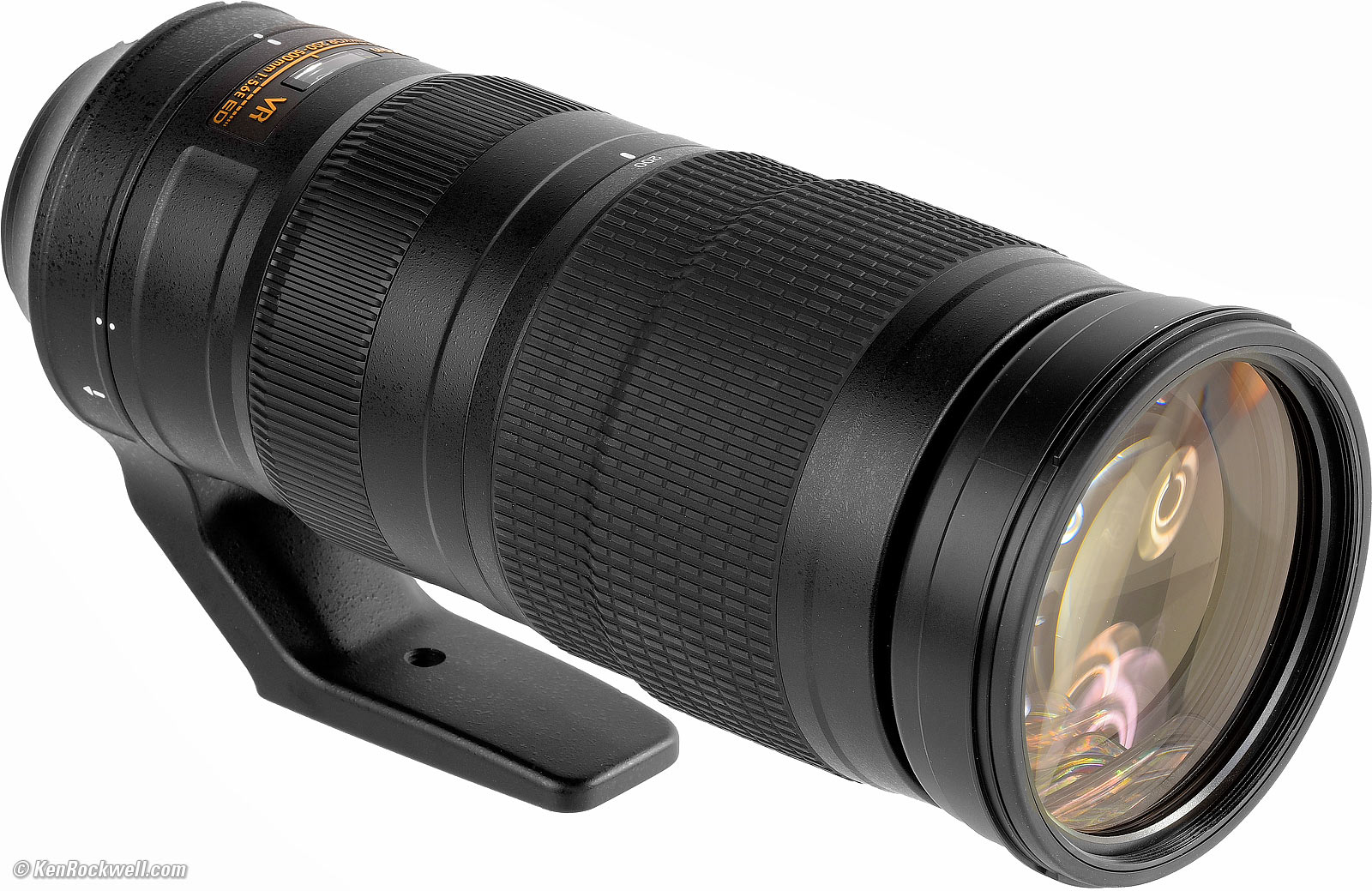
Lens plate designs for the Nikon 200-500 lens

 Image by Ken Rockwell

Nikon has been getting a lot of bad press lately for questionable investments (360 key mission cameras) and decisions about it's products (cancellation of DL compact cameras) as well as a total no-show at the latest CP+ camera show in Japan in early 2017, the year of their first century - not out.  The interchangeable lens camera (ILS) and compact camera markets are shrinking year on year as more and more people buy smart-phones...

Pity, because at it's core there are some pretty good lens and camera designers that have given us hits like the D3 full frame in 2007, the D700 (the D3 wolf in sheep's clothing) in 2008 and lately (2014) the D810, a camera so phenomenal that two years after it's release it is still considered by many as one of the best all-round cameras out there. And that's saying a lot as since it's release both Canon and Sony have upped the mega-pixel wars and released worth adversaries.

As to lenses Nikon has also been quietly productive coming out in recent years with some ground-breaking designs such as the 14-24 f2.8 wide angle zoom lens that redefined what a zoom lens could or should do.  It was so spectacular that it totaly eclipsed Nikon's own prime 14mm f2.8 lens. A zoom better than a prime you say?!  Yes, I can confirm from personal experience that this was indeed the case.  Since then with a few wobbles along the way (Nikon 70-200 VRII focus breathing debacle anyone) they have managed to quietly come up with some stellar lenses such as their line of f1.8 consumer lenses (20mm, 24, 28, 35) which seemed just as good as their trice more expensive f1.4 versions, or the unique 105 f1.4 portrait lens and let us not forget the insanely expensive but well received 70-200 f2.8 E lens that resolved the focus breathing issue, focuses closer and has finally got it's focus buttons back.  And that lens comes with a particularly well-designed lens foot.

Glad you brought that up about the lens foot.. Because THAT seems to be an area that Nikon has not been at the top of it's engineering game if this man is to be believed.  "This man" is Bjorn Rorslett and he has criticized just about every lens foot design that came out of Nikon since it's transition to AF-S motors and basically has said that they are all cow's manure.  There is now a whole new industry started by people like Really Right Stuff and Kirk and Wimberly that created alternative foot supports for lenses to a) be used in Arca-swiss style clamps, the defacto standard in photography and b) to resolve the issue of less than stellar support in some cases.  We'll get back to RRS in a little while.   Suffice it to say that for around 20 years these manufacturers and now a slew of Chinese copycats have been improving on OEM designs and making money.

If you've reached this far into my post you may be wondering what the whole point of this history lesson has been.  And you would be right in asking that.  So let's now turn away from history in general and focus on my personal experience.  A little over a year ago I went out and bought my very own Nikon 200-500 f5.6E lens (released in 2015).  For any of you uninitiated in the world of camera lenses a 500mm lens is quite a beast, the gold standard for nature photography and pap-style shooting.  Nikon had finally come out with a zoom lens that reached out this far and in a very budget-friendly price of $1395 or thereabouts.  This lens intrigued many reviewers who immediately set the hoards of nature photographers out onto online retailers with the exhortatation of "Buy, buy, buy".. in the vein of Hollywood movies about Wall Street.  And I dutifully obeyed.
And when my lens arrived I was astounded at a) it's size, b) it's weight and c) it's image quality.  It was so good that I nearly threw my 28-300 superzoom away in disgust!  (Later I traded that lens for a 20 year old 80-200 f2.8AF-D, but that as they say is another story).
However all the A + B meant that getting any decent C out of the lens meant proper support. On a tripod. A very big and stable tripod.  Which fortunately I had.  When used in static positions with a Wimberly sidekick gimbal mount (remember the lens plate guys I mentioned above - this is one of them) the lens worked a treat and though top heavy, especially when extended out to 500mm, it still worked ok.
Where the lens didn't work was when hand-held, or when travelling and then walking around with the lens. For example as I might do at the top of a mountain on a 3 day hike taking pictures of rare birds. Or at an airshow with planes swooping everywhere.  Or out a window taking pictures of the couple across the road... Ok scratch that last one!  In those situations it was a real pain in the rear end.
Why?
Well, the badly designed lens foot.  Besides being a cantilevered design, shown by the gentleman I mentioned previously to be thorougly inadequate for locking down a lens to avoid vibrations, there was nowhere to support the lens when you weren't using it.  You either had to sling it onto your shoulder while keeping a hand on the camera or keep it in a bag... a very BIG bag.  Having it hanging from the camera straps around your neck was inviting disaster as both lens and camera mounts were likely to sag and bend from the strain..  Also because Nikon (unlike Tamron in 2017) doesn't build in the arca-swiss dovetail design into their lens feet meant I had to add a plate from, yes, you guessed it RRS from above.  That plate worked fine for fixing the lens to a clamp on a tripod, but there was no-where to attach a strap on the lens itself, as Nikon's more expensive lenses have as standard. Ok, I won't moan here.. I'm getting a $1395 lens that is pretty close optically to a $6500 lens.. I can't expect the same level of finishing. Still...  Nikon could have put just a little more thought into the design..

Now more than a year into the len's release Kirk, then Chinese copycat guys and finally our trusty friends from RRS have come out with some solutions. But do they solve our problems? Let's have a look.  First up is the Kirk/Chinese solution, which I found first about 2 months ago on Ebay.
 
The Chinese ($50) is an close copy of the Kirk ($150) although the plate is not as long - They essentially remade the whole mount including lens collar and integrated an arca swiss dovetail into the foot.  Up to here all is good as it resolves having a lens plate and at $50 (if you're ok with the Chinese copy, which I am) is not excessive considering you'd have to pay around 15-20$ just of the lens plate... and you eliminate the risk of the lens-plate coming loose at any time (it has happened though thankfully no disasters ensued!).
However one glaring design flaw is that they've made the cantilivered design even more fragile and prone to introduce vibration into the lens. I come to this conclusion only by looking at the images online in the ebay advert.. although this very good review in the DPREVIEW forum counters my claim...  I won't belabour the point, but for me it's a case of 1 step forward and 1 step back.
Then a week ago I saw a RRS tripod colar for this lens advertised on B&H!  For the modical amount of $250!  Yes, RRS is not shy of their prices, but I can attest to their quality. But $250???????!  Anyway, let's examine the soundness of  the design.  They too include an arca-swiss dovetail into the lens foot but improve on the Kirk version by setting the foot all the way back and eliminating the cantiliver aspect thereby making a support that is sure to be more stable (though testing would be required to see how stable).  A nice touch is that they've recreated Nikon's own foot release (from their 70-200 line of lenses) which makes taking of the foot child's play.  However in a display of truly not understanding HOW some of us photographers work out in the field, they've added a lens strap to a lug screwed into the bottom of the plate (this may not be included in the package and was in the B&H photo section for the lens).
Why is that not a good thing? For one it makes carrying the lens on a strap and using it on a tripod or monopod mutually exclusive, as you have to unscrew the lug before you can slide the foot into a clamp.  The whole POINT of arca-swiss style plates and clamps is that they are fast to use!  Secondly and more importantly those lugs can come unscrewed very quickly, especially if you're running along with the lens flopping along behind you.. That can spell big trouble.
So although a much more stable design when used on a tripod, the RRS basically negates it's usefulness by not having an adaquate CARRYING solution..

And the solution?
Well I present my MacGyver workaround that hopefully will inspire a lens plate manufacturer to come up with something a) economical b) that solves the cantiliver stability problem c) includes an arca swiss plate into the foot and d) includes a solid carrying connection solution built into the lens plate by placing lug mounts on either end of the lens plate that distributes the weight of the lens on two points and allows the use of comfortable carrying straps such as the Optech. Phew... I can breath now after that long sentence!


I have taken a $20 chinese clamp (great quality by the way) with dual slots for straps to be mounted, threaded through Optech quick release straps, put a plate onto the Nikon lens foot (about $10 for a chinese knock-off, or around $50 for my RRS plate) and now have a stable solution to carry the lens thus and for the modical amout of $30 (or $60).

When I want to use a monopod or tripod, I simply loosten the chinese clamp and voilá!
I'm a bit saddened that a company like RRS that supposedly only manufacture lens and camera solutions hadn't thought about the need to hand-carry a lens so obviously designed for hand-carrying.  Makes me wonder what we're paying the big bucks for?!  The Chinese solution is a little bit less thought out although it does solve one fundamental issue (arca-swiss clamp) and with Vibration Reduction (VR) in this lens it is debatable whether the cantiliver issue will be a problem in anything but the longest or shortest exposures.. and at the price they are truly competitive.  RRS does have an elegant design with a removable foot, I do admit. But elegance is trumped by practicality, and there is not enough of it going on here.

My solution is not without it's flaws.  A plate bolted onto the Nikon lens collar can become dislodged.. the lens clamp I've attached to the plate can also work it's way loose if not tied down properly.  But overall and for short periods of time it makes hand-carrying this beast of a lens quite enjoyable.  It's there in your hand when you need it, and you slide it back behind your shoulder when you're walking looking for an image.

So the call is to you plate manufacturers! Can you make a one-piece solution?